BACKGROUND
The AIs took the world and wrecked it. They are still here: black obelisk towers pulse across the landscape and T-class hunters patrol around them. The people are mostly gone. Nobody will explain what happened — you piece it together from newspapers, diaries, floppy disks, video tapes and dead computers left where they fell.
You wake washed up on a beach, and it is not your island. It is OGYGIA, and it belongs to CALYPSO, who keeps you here well, and kindly, and completely.
A resistance called RON — Reality or Nothing — hid weapons and tools in crates through the ruins before it went quiet. Whether it still exists is never settled.
GOAL
Get home to Ithaca. Five islands stand between you and it, and four daemons run them.
| 1. Leave Ogygia | Calypso is the one daemon you do not kill — her core cannot be broken. Reach the terminal on it and refunction her, and she hands over her shipwright's recipe, the golden axe. Build a greek ship with it: wood, plus a sail from a beached wreck and an oar and a rope from the fishermen's huts. A raft is not a ship, and Poseidon rows you straight back onto your own sand. |
| 2. Sail | Board the ship and row out until there is no land in any direction; only then does the chart open. AEGILIA (POLYPHEMUS), AEAEA (CIRCE), THRINACIA (HELIOS). |
| 3. Fell each daemon | Break into the island's fortress and break its core open. Every machine on that island powers down where it stands. |
| 4. Come home | With all four down, sail to ITHACA. Argos lifts his grey head and knows you. That is the end of the road. |
Landing somewhere new sets a checkpoint you can load from the title screen. Each island is keyed to its own daemon, so one virus never opens the whole archipelago.
HACKING
Every obelisk has a small screen on it: walk up and click the screen to jack in. You need an access chip first — felling any tower always drops one, and every machine you destroy sheds a chip fragment, so collect eight and press C to assemble one. Carrying a chip is enough; you do not have to hold it. While you are logged in, the obelisk hides you from the machines.
Inside is the AI's own operating system, running AI-ML — a small ML the resistance left scattered through the ruins. Start with these:
scan | list the obelisks on the wire |
name | the node you are standing on |
hack OB_XXXX | hands you that node's own key |
crash OB_XXXX k | knocks it dark, with the key hack gave you |
loop OB_XXXX | freezes a tower and its garrison until a repair drone unpicks it |
help | the console teaches rather than gatekeeps — ask it |
The amber HERMES relays on the hilltops are a separate system, RON's
own, and that is where you forge the virus for each island's daemon. The
NostBook (L) is a laptop you repair and carry, and it runs
a real UNIX with the machines' own web on it. Read /readme.txt
first.
TIPS AND TRICKS
| Open every box | This is the single most useful habit in the game. Press E at the crates inside buildings: RON left crowbars, bats and machetes in them, and the guns — and lots of useful things that will help you along the way. Search everything, everywhere. Almost every good thing you own will have come out of a box. |
| Text for help | The phone (O) sends as well
as receives, and both correspondents answer commands. RON knows
things: supply, relay, status,
what is a bluebox, recipe goggles,
mayday. Calypso does things: sleep stops
the machines near you, fog thins it, hungry
lays a table. Every favour of hers tightens her hold on you, and she does
none of them once she has gone cold. |
| Save at a terminal | Type save at any
obelisk, HERMES relay or on the NostBook and it writes a checkpoint you
can load from the title screen. One slot per island, overwritten each
time. Do it before you go into a fortress. |
| Eat before you starve | Health only comes back when you are fed and unpoisoned. Berries and meat are out there; cook what you can. Three wood and 6 lays a campfire: stand by it and press E to roast meat, worth nearly twice raw and it gives you some strength back. It burns down, so feed it more wood or lose it. |
| Get into the grass | Tall grass is cover. Walking through it, a machine reads you as roughly twice as far off as you are; standing still in it, four times. Sprinting does the opposite and gives you away. Watch the word beside your bars: IN COVER, HIDDEN, LOUD. None of it helps once something is standing over you. |
| Hide, don't just run | Every hunter needs to actually see you. Break its line of sight behind a wall or a hill for a few seconds and it gives up and wanders off. |
| T1s cannot climb | Put any rise between you and a wheeled hunter, or lure it into a hollow and it is stuck for good. Sprinting outruns it. A T2 walks at exactly your pace, so break away with Shift or stand and fight. |
| Jump twice | Space again in mid-air lands you on top of a wall block, where ground machines cannot reach you. |
| Fell a tower for the parts | A toppled obelisk drops circuit boards, batteries, scrap and always an access chip. Carry a stun-gun, an electro-gun and a Wi-Fi block together and you are prompted to build the OB_gun with C. |
| Read what you find | Click a book in your pockets and you read it — it teaches its skill for good and opens on your shelf. Every book you have read is kept in the Library: press Shift+N, or N then LIBRARY. A few of the paperbacks are whole books, and those you can read from cover to cover. The Scrapbook itself keeps the scraps — field records and album sleeves. |
The tabs along the top have the detail: keys under Controls, the machines and the terminal language under Machines, and the archipelago under The sea. Press H any time to come back here.
Character
or name them:
Keys
Movement & camera
| W A S D / arrows | Move |
| Mouse | Aim — you always face the cursor |
| Shift | Sprint (drains stamina, burns food faster) |
| Space | Jump — clears a step of terrain or hops out of a pit. Press again in mid-air to double jump and land on top of a wall block — up there ground machines can't reach you (a low crate won't save you, though) |
| Scroll wheel | Zoom in / out |
| Z | Toggle zoom (close over-the-shoulder / old wide view) |
| Right click | Inspect a tile — car, wall material and age, or terrain height |
Combat & tools
| E / / / left click | Use the held tool: swing, fire, dig, chop, throw a bomb |
| Aim a bomb | A held bomb lands on the tile under the cursor, out to its throw range — click close to drop it near, farther to lob it out |
| 1 2 3 4 | Select a pocket slot |
| 5 | Select the backpack's spare-weapon slot (if you have one) |
| G | Swap the held weapon with the selected pocket |
| Backspace | Drop the selected pocket's contents (or the held tool) |
| Click a slot | Equip it straight away (click the hands slot to stow whatever's held) |
| Drag a slot | Move or swap items between pockets, hands, and backpack storage; with the pack open (I), drag an item off onto empty space to drop it on the ground |
| Click the forcefield | Arm or disarm it in place, wherever it's carried — no need to hold it |
| Click the electro-compass | Arm or disarm it in place — stays on until you drop it |
| Click the pack badge | Opens the full backpack panel (same as I) |
| Enter (in a terminal) | Runs the typed AI-ML command; ↑/↓ recall previous commands |
| R | Reprogram a drained (battery-flat) robot standing next to you — costs a battery; otherwise reads the first book in your pockets |
| U | Bluebox a downed machine (stunned, drained, or recharging) beside you into a green-eyed gardener — costs a circuit board; needs a bluebox built first |
| X | Transmit as the obelisk you are standing under (OB spoofer + a battery) — every unit homed to that tower takes its orders from you |
| L | Open the NostBook (its UNIX shell, AI-ML, and Netscape) |
| C | Craft (OB_gun; wave gun with eight circuit boards; night-vision goggles; bluebox; repair a broken NostBook with three circuit boards) |
Survival
| Q | Eat the first edible thing in your pockets |
| B | Lie down and rest: the screen dims, the clock spins on, and health returns (not while hurt-free, on cooldown, or something's hunting you) |
| Dropped loot | Items left on the ground decay over time — perishables fast, salvage slower, dropped weapons slowest; they flicker as they're about to go. A few irreplaceable things never vanish. Grab what you want before it's gone |
Menus & info
| I | Backpack |
| K | Skills & knowledge |
| V | Armoury — every weapon found so far, with a power rating |
| 9 | KLEOS — the song of this run: the tracks you are climbing, the badges you have earned, and whether a laurel still holds |
| J | Scrapbook (scroll with the wheel or up/down keys) |
| H | Toggle this help |
| Click away | Closes whichever of the above is open, same as clicking outside this panel |
System
| P | Pause the game |
| M | Cycle the music: three found tapes, the old piano bed, or off |
| O | The phone — SMS to Calypso and the RONs (and Snake). Esc, the ✕, or a click off the screen puts it away |
| N | Open the Scrapbook — field records and album sleeves, tabbed. The LIBRARY button there opens your shelf of books read |
| click a book | Reading it: the skill is yours for good and the Library opens at that book. A few are whole texts you can read right through |
| Ctrl+N | Start a new game (asks first — wipes saved progress; a bare N no longer does this) |
| Shift+N | Open the Library — every book you have read, and the whole text of the ones that have one |
| 0 | Fold the panel buttons away and back — the column down the right-hand edge that opens the Help, Scrapbook, Library, Record, Minimap, Armoury and Kleos. The grip under it does the same |
| Esc | Close whatever is open; with nothing open, back to the title screen. Your run is saved and Continue picks it up — it only asks first if you are at sea or in the Backspace, where it cannot be |
| Shift+Q | Leave for the title screen directly |
| S | On the Certificate of Death: copy it to the clipboard as an image (or click the Copy button) |
Books
Some buildings still hold books. Read one (R) and the knowledge is yours for the rest of the run. Woodcraft, herb lore, tracking, endurance: each book teaches a skill that changes how you survive.
Backpack
A rare find in the ruins. Once you have one it carries itself: 16 more slots and a spare-weapon slot, filled automatically once your pockets are full. Eating (Q) and firing a gun draw from it too, once your pockets run dry — no need to shuffle things forward. Press I to see what's in it.
Death is final
Dying restarts the game from defaults — score, skills, kills, everything, wiped clean, and a freshly shuffled world to go with it, exactly as if you had chosen New Game yourself. Clicking away the Certificate of Death does the reset; there is no continuing the run you just lost, only starting the next one. Winning is the one exception — dismissing a victory certificate just lets you carry on with what you've earned.
Staying alive
Food drains all the time and faster when you sprint. Find tinned food in the broken buildings and berries in the tall grass, and walk over loot to pocket it. Health only recovers when you are well fed; starve and it drains away. A felled tree drops wood — but not to a penknife: it's too flimsy to cut timber, and trying just tires you out and nicks your health. A saw, machete, or axe-like tool does the job. Nights are dark and dangerous: find torches in the buildings to carry a pool of light with you. An emptied resistance cache isn't gone for good either — RON quietly restocks one every so often with fresh batteries, ammo or shells.
Reloading the page without starting a new game isn't a clean reset either — it wipes your score and your entire obelisk kill record, just like a death would. Reload is only punished when it's used to duck out of the run you're already in.
The animals
| Feral dogs | Hunt in packs; barking (!) means they have seen you. Hurt one and the pack backs off. Don't let them surround you. |
| Boars | Paw the ground, then charge dead straight. Step aside: a boar that hits a wall stuns itself. |
| Vipers | Near-invisible in tall grass; their venom drains health long after the bite. Where there are berries, there are snakes. |
| Ravens | They don't bite; they tell everything else where you are, and they steal food. Keep to the trees. |
| Argos | The old dog on Ithaca. He has the run of the island, and he comes to you. |
The machines
The AIs still control this land. Their black obelisk towers pulse across the landscape, and their T-class hunters patrol around them.
T — the TERMINAL class
Posted to the towers, and named for them. What you meet first and most.
W — the WEAPON class
Printed by the W-factory and sent out. Kill the factory and these stop coming.
V — the VECTOR class
These run WEIGHTS, not rules — directions in a space too large to picture. Posting to one is a fine-tune, not a rewrite.
M — the MILITARY class
The fortress detail. Foundry-sealed: these take no field program at all.
B — the AGAMEMNON class
One to an island, standing over its factory. The only machines the estate named instead of numbering. They do not trade blows; they print them.
| T1 | A wheeled hunter, faster than your walk. It cannot climb: put any rise between you, or lure it into a hollow and it is trapped for good. Sprinting outruns it. |
| T2 | A biped stalker that walks exactly at your pace and does not tire. Sprint to break away, or stand and fight. |
| T1w | A T-1 built cheap and printed to a wave order: quicker than your walk, and made of almost nothing — one swing of anything drops it. It is a distraction by design, and four of them at once still do less than a single T-1's ram. Only an AGAMEMNON-class machine makes them, and it makes them by the handful. They are not foundry-sealed, so a NostBook can post a program onto one: turning the swarm is a real alternative to clearing it. |
| T8 | An amenity unit, and the only machine in the game that cannot be made to fight — hunt is not in its repertoire, so a program that asks for it faults. Four of them keep the lit floor of CALYPSO's grove. Stand on the lumen and they come together, in waves, and shove you off it: you lose a couple of tiles of ground and nothing else. No damage, ever. Read its braincode and you find it has settled, on a technicality, that it is entitled to move you along. |
| V1 / V5 | The V-class, and the only machines on the island whose braincode is not written down. Where every other unit carries a few lines of ML you can read, a V-class carries weights — a small neural net, floating point, and the header says outright that nobody at RON knows why the numbers work. The V1 is a courier: it walks to flat machines and gives them a cell, so cutting it means the fallen stay down. The V5 is a gardener running the same architecture with its own weights, out in the open sowing dead ground. That pairing is the point — the V5 does a job with an obvious right answer, so it is the one V-class machine you can actually judge: you cannot read the net, but you can watch whether the ground gets sown. Set one beside a W5, which does the same work on five readable lines, and the difference is the whole argument. |
| T3 | Rare, and unlike a T1/T2 it never chases: a wheeled sentinel — a T2's trunk on a T1's undercarriage — that camps near its tower with a pair of always-lit orange laser eyes. It waits, unnoticed, until it actually gets a clear shot; the eyes flare, a charge-line joins them, and the twin volley lands at roughly double a W4's bolt, then a long quiet recovery. Get in close and it only rolls back far enough to keep the shot lined up; at point-blank range it claws instead. |
| B1–B4 | The AGAMEMNON class: one to an island, standing over the W-factory it was posted to, and the only machines the estate named rather than numbered. They are the kings who took Troy — and the man walking up to them was there too, and did it another way. Same panoply every time, because it is one foundry design; what changes is the metal and the temper. B1 AGAMEMNON (Ogygia) black and gold, the king of men. B2 AJAX (Polyphemus) ox-hide over bronze, carrying the sevenfold tower shield — far more rim to break through, and no tougher underneath it. B3 DIOMEDES (Circe) bronze gone hot: the one who wounded two gods in an afternoon, and the only one that closes on you instead of standing off. B4 ACHILLES (Helios) silver-white, the shield with the world on it — the heaviest hull and the biggest waves. Each releases five waves and cannot be killed until all five are out; between them it seals, and a blow rings off it. It opens its ports for two seconds before each wave, and that is when it can be hurt properly. |
Every hunting machine — T1, T2, T3, W1, W4 — genuinely needs to see you: break its line of sight behind a wall or a hill for a few seconds straight and it gives up the chase and wanders off, only re-noticing you later if you wander back within range. Hiding is a real tactic, not just running far enough. The T3 takes this furthest: unlike the others it never notices you by proximity alone, only by an actual clear line of sight, so staying out of its sight lines in the first place is the whole game against it.
Whatever is in your hand can be swung at them, even nothing at all — bare fists land a weak hit, a proper tool or blade lands a much harder one. Your penknife barely scratches them. RON — a resistance calling itself Reality or Nothing, whether or not it's still out there — hid weapons in crates inside the buildings: search them (E) for crowbars, bats, machetes, and if you are lucky the guns: a stun-gun (drops a machine cold for a while), an electro-gun (destroys a machine outright in a shower of sparks, scares off nearby animals, and its arc even scorches obelisks — a slower way to fell a tower than the OB_gun, but it works; its internal cell slowly self-charges while carried, so it never stays flat for long), a pistol or a shotgun (holes in anything, but gunfire ruins the salvage). Guns are dead weight without batteries, ammo, or shells, hidden in the same crates. None of them shoot through a wall — a solid object blocks a shot exactly like it blocks a step. Pulling the trigger with nothing in your sights still fires — and still spends the round.
On defence, the crates sometimes hide shields. Just carrying one protects you — no need to hold it, and a faint deflector ring shows around you while it's up. A riot shield absorbs a laser from any direction, but it is only sheet metal: enough blows and it caves in to scrap. The great shield — the aspis, cut off the B-1 AGAMEMNON when its rim finally gives — is the better one, and the only piece of a machine's panoply a person can take up and wear. A rarer mirror shield throws the shot straight back to destroy the machine that fired it, but every reflection heats it — press it under sustained fire and it glows red, stops bouncing shots back, and finally melts into a lump of scrap (let the fire ease and it cools off again). Rarest of all is the forcefield — but it's the one exception that needs a deliberate switch: click it in whichever slot it's sitting in (hand, pocket, or pack) to arm it. Once armed and carried, a green energy shell wraps right around you that nothing — shot or blow — can get through, burning a battery a minute (faster under heavy fire, since every blow it eats costs extra charge) and pulling a fresh one from your kit when a cell dies; with none left, the field drops until you feed it one. Click it again any time to disarm it and stop the drain. A swarm eats it alive: a T1w does not try to get through the shell, it earths itself on it and takes a bite of the cell doing so — many times what an ordinary blow costs. Against the B-1's waves the forcefield is a costly minute, not a way to stand still and be safe.
Every machine runs on a battery: hunting drains it and they crawl home to their obelisk to recharge. One that gets stuck runs flat where it stands. A flat machine can be reprogrammed (R, costs a battery) — it turns friendly, follows you, and a friendly T2 fells trees for you — or, if you'd rather just be rid of it, it can be destroyed like any other kill: it can't fight back while flat, and it still drops scrap.
There is a second way to turn a machine, and it is what circuit boards are for once POSEIDON's blight is loose: the bluebox, soldered from a couple of boards (C). You cannot bluebox a machine that is still hunting — stun one first (the stun-gun), or catch one drained or recharging — then press U beside it. It spends a circuit board, its eye flushes green, and it turns into a gardener: it stops fighting for good and walks the dead ground reseeding it, the same as a W5. So the boards a felled tower drops become a way to raise a green army against the blight — the machines that wrecked the island set to healing it. (It is a real drain on circuits, one board a splice, weighed against the wave gun that wants all eight.)
The OB spoofer takes the opposite trade. Where the bluebox is surgical and safe — one machine at a time, and it has to be down already — the spoofer is a transmitter that impersonates a whole tower. Stand under an obelisk, press X, and it spends a battery to speak in that tower's voice: every unit homed to that node turns and takes its orders from you. Standing in the open under a live eye is the cost, and knowing whether the garrison is worth a cell is what the NostBook is for — a tower's own page on the machines' web lists the units homed to it, so you read first and transmit second.
The obelisks can be brought down. Carry a stun-gun, an electro-gun and a Wi-Fi block together and you're prompted to build an OB_gun (C): five burns topple a tower into a heap of circuit boards, batteries, scrap, and an access chip — every tower you fell always leaves a chip, so bringing one down hands you the means to jack into the others. A rare insane bomb can level one on its own (and it, too, drops the chip). And the robot-sword cuts a tower down in melee — about ten strokes, slower than the electro-gun's arc, and you have to stand right under the eye to do it; no other blade bites the alloy. Every tower is assigned one of eight circuit numbers when the world is built, so toppling every obelisk always gets you a complete set of one to eight — collect them and you can build a wave gun (C), which fans laser fire through a whole crowd at once. Clear an island's towers and you have broken its network — but the island is not finished until its daemon is (see The sea), and the run is not finished until every daemon is down and you have come home to Ithaca. Run out the countdown first and POSEIDON wakes (on Calypso's island of Ogygia at least — the other daemons run their own networks) and the towers stop being separate machines and become one organism. A fog drops over the whole island so you can see only a short way — night-vision goggles (found, or crafted from five torches and a circuit board) are the one thing that pierces it. The towers pool their sight, so stepping into any one tower's view turns every hunter that can reach you toward you at once. And a blight creeps outward from every live tower, greying the living ground to dead "standing reserve", killing the trees on it and darkening the water it runs into — while the factory throws wave after wave of W4s. It isn't hopeless: felling or jamming a tower freezes its blight and cuts it from the net — break the chain and the fog thins, the shared sight loosens, and the spread stops. But felling heals nothing on its own; the dead ground stays a scar until you sow grass seed on it a square at a time, or the reprogrammed W5 gardeners reseed it once the network link is down. Keep knocking towers down faster than the repair drones raise them and you win outright, even mid-purge.
Each obelisk has a small terminal screen on it. Walk up and click the screen itself to jack in — but you need an access chip to do anything. You get chips two ways: felling any obelisk always drops one, and every machine you destroy sheds a chip fragment — collect eight and press C to assemble a whole chip. Carry a chip (you don't have to hold it) and clicking opens a channel: a connect bar runs, then a live green console — the AI's own operating system, running on the machines' hardware; the access chip is only what gets you in to it (the warm-amber HERMES relays up on the hilltops are a separate system, RON's own — the colour tells them apart). While you're logged in the obelisk hides you from the machines. Click a terminal with no chip and you get the same AI system locked down — an untouchable magenta wall of moving data. Carry the electro-compass and click it to arm it — it stays armed until you drop it. Once armed, your aim marker becomes a small cluster of needles, one for each nearest thing worth finding, colour-coded: blue for the factory, green for an obelisk, yellow for a dropped backpack, orange for a dropped OB_gun.
The console at the terminal runs AI-ML — a tiny language the resistance left scattered through the ruins as runnable scraps, half command and half operator's note. It is a little ML top-level: type a command and it runs, and a bare let x = e (no in) binds a value that lasts the rest of your visit, so you can build a program line by line. Prefix a line with * to run it as a plain command with literal arguments, BBC-Micro style (*scan, *timer, *print map); everything without a * is an AI-ML expression. Strings work too — echo "hello world". And you can write your own functions: fn x => x is a lambda, let inc = fn n => ... names one, and let f x = ... is the shorthand — a named function can call itself, and with arithmetic and if a recursion can terminate, so it is the way to loop. Lists are built from nil and :: (1 :: 2 :: nil) and taken apart with hd, tl and length. You can declare your own kinds of value with datatype (datatype shape = Circle of num | Rect of num * num) and take them apart with case (case s of Circle r => r | Rect w h => w * h). There is deliberately no map: with recursion and case you can write it in two lines, and writing it is the point. Reading and hacking need no AI key — the chip that got you in is enough. Type scan to list the obelisks on the wire, scan |> nearest to pipe that straight to the closest, name for the node you're on. loop node pins an infinite loop into a tower, freezing it and its garrison where they stand until a repair drone works the loop back out. hack node hands you that node's own key, and only with it does crash node key knock it dark for a while — let k = hack OB_XXXX in crash OB_XXXX k is the two-step spelled out. sleep 30, repel, and rewind 3 (only before POSEIDON comes online) buy you room, though they reach less far than they used to. The AI key (from a wrecked W-factory) is now needed for one thing only, the fortress: it comes sealed, so copy aikey to bring it into the console, decrypt it, and unlock with a hacked node key and the clean key together to drop a fortress key — copy aikey / let k = hack OB_XXXX / let d = decrypt aikey / unlock k d. That recipe is not in help; you find it on a scrap in the ruins. print aikey stamps a spare key at your feet, and an AI key never rots on the ground, so you can stash copies. The fragments you find teach the rest one idea at a time, and each real command copies itself into your notepad — a general page-collector: type notes, or press N anywhere, to flip through it (arrow keys, the ‹ › on the top bar, or the Contents drop-down). Find and read the RON-DOS Operator's Manual and the console starts autocompleting verbs — faded ghost text you accept with Tab (or → at the line end). map pulls up a schematic of the AI's whole territory; print map runs off a physical copy you pick up and click in your inventory to unfold anywhere. On a HERMES relay you can backup aikey and restore aikey: RON keeps a copy of your key off the AI's hardware, so a bad death needn't cost you it. Get something wrong and the terminal tells you what to try — it's built to teach, not to gatekeep. There's also a secret word, never spelled out anywhere — find it and the terminal drops you back into the world to watch what it does.
The OB_gun's beam is just as final against a machine as against a tower: any robot caught in the line is wiped out on the spot, whatever its class — though, like any gunfire, it ruins most of the salvage. The limit is ammunition: every burn spends a battery, and batteries are better saved for the towers themselves.
Somewhere on the map sits a W-factory: a huge 8×8 foundry where everything mechanical that isn't an obelisk-side T1/T2 is actually built, not at the towers. You can bring it down — hammer its hull with a weapon (a damage bar shows over it when you're close) or catch it in a bomb blast; after many blows it collapses into a walkable heap and drops an AI key, a way into one AI's mainframe (more use for that to come). Kill the factory and its waves and repair drones stop. Topple a tower and the factory dispatches a revenge squad of W1 hunters, tougher and faster than a T2, but strictly melee — a hit needs one standing right on top of you, not just nearby. W1s attack in real waves — each one closes in and strikes, then falls back to regroup, then closes in again — and a squad spreads out to surround you rather than piling onto one spot. They track a position triangulated from the obelisk network, refreshed every few seconds rather than live, so even a jammed Wi-Fi block only slows them down, not stops them. The factory also fields fresh W1 waves on its own clock, an unarmed W3 repair drone whenever a damaged tower is left standing, and a W4 laser hunter-killer — unlike a W1 it never closes to melee, holding its range and firing on you instead, both the instant you attack an obelisk and, independently, every half hour of game time.
Out on the water, W2 droids hover in squads just above the river. Idle, they drift; but come near them and the whole squad turns and fires on you in waves. Their shots only reach you while you're in the water though — stay on dry land or a bridge and you can pick the squad off from the bank in safety.
Deep in the south, past a hacked doorway and a maze, stands a walled fortress — the seat of one of the island's AI minds. It fields its own M-class guard. In peacetime only a drone or two patrol: the M4 is an unarmed report drone — it never fights, it just holds you in sight and reports the breach — and if it loses sight of you it heads for the spot it last saw you and sweeps there before giving up, so ducking behind a wall isn't enough; you have to actually move on. Slipping past its cone unseen in the first place is how you stay quiet. Get spotted and the fortress core rouses into a relentless violation response: it manufactures wave after wave and throws them down the maze at you. M6 are pack robots — they attack in threes to fives, closing to strike then falling back to regroup, and a lone one hangs back until the pack forms. M5 are snipers — they hold back out on the open quad and plink you with a low-power orange laser, annoying rather than deadly. Break the core's hull down (heavy kit only) and the AI dies: every machine on the whole island powers down where it stands — and every obelisk goes dark with it.
Guarding the W-factory on CALYPSO's island stands the B-1 CARRIER — the only black-and-gold machine anywhere, half again the size of the pack it walks with, and drawn as a king in panoply: greaves, a corslet worked in gold bands, a great round shield and a helm. It is carrying a HERMES credential, and killing it is the warrior's road off Ogygia — the whole escape chain, without opening a single shell. It walks a wide beat around the building and it will not attack you for turning up: walk over and look at it and you get a slow, unhurried withdrawal and nothing else.
Hit it, or hit the factory it is standing over, and the fight starts. The B-1 does not trade blows — it backs away at a walk and prints machines at you, waves of T1w swarm units, four while it is whole and ten once it is nearly gone. Getting through the swarm is the fight; the machine itself is only about an M6 and a half. Watch its chest: the gold bands and the vent slits between them run up through orange to white-hot as its hull goes, so you can read how close the end is off the machine itself.
Two phases. Its great shield eats every blow while the rim holds — cracks open across the face as it wears — and when it finally goes it falls off, the arm is bare, and the hull takes everything from then on. The shield it drops is the aspis, and you can pick it up and carry it yourself: black field, gold rim, and it stops a laser like any other shield. It came off something that was using it properly.
You can leave. No damage and nobody near for a few seconds and it stands down and goes back to its beat, with its shield whole again — so a player who is not taking the warrior route can simply walk away and forge the card the reading way instead. And you can read its mind but not change it: the B-1 serves its own program to a NostBook get and refuses every post, because it is foundry-sealed. What is in there is a constitution with Asimov's three laws in it, every clause commented out, with three deferred reviews and a "review closed, no action" logged underneath. They were true once. Somebody typed two characters.
The Codescope reads a machine up close. It is in the ruins, or C makes one from a circuit board, a chip fragment and two scrap. Hold it and click a machine within six paces: the machine stands still while the window is open, and the window shows what its senses read, what it chose, a one-line account of what it knew and what it did, and its program, which you can edit and Write back. Type over a reading to feed it a different one; tick or untick a yes/no sense. Send home, Shut down, a tag, and the eye colour are there too. Under the program are notes other readers left on its lines, and you can add your own. Each change costs a little of the scope's charge, and it draws a battery from your kit when it runs low.
A nut on a strip of cloth is thrown where you aim (C makes six from one scrap). A machine near where it lands that cannot see you walks over to look. The strip marks the spot, and you can pick the nut up again.
Weapon strikes on any machine now throw a shower of sparks on impact.
Bombs
Scavenged timed bombs come in four sizes — small, medium, large, and a rare insane one. Hold a bomb and use it (/ or left click) to throw it, ticking, a good distance out — thrown in an arc, so it clears a wall or a low block between you and the target instead of stopping dead at the first one, useful for reaching a W4 that's holed up behind cover. Then get clear. When the fuse runs out it goes off in a cloud of fire that hurts everything nearby — animals, machines, droids, and you. The insane bomb is fierce enough to bring down an obelisk.
The world
A river divides the map; the bridges are the only crossings. Streams can be waded, slowly. Away from the towns the ground gets properly rugged — steep, tall hills and deep hollows, not just gentle rises — and high ground costs stamina to climb. Rubble and rocks can be climbed too, one step up like any other rise, and walked across the top of once you're up there — building walls stay solid, so a town or a house is still a real boundary, not just another slope. Somewhere in the ruins, the story of what happened here is waiting to be found. Sprayed slogans turn up here and there on the walls — some anti-machine, some signed by RON — and abandoned cars sit dead on the roads where the grid failed them.
Ubik & the tear
A battered can of Ubik turns up somewhere in the ruins. Each spray brightens a patch of ground and everything on it, warmer and more real, fading back after a while — and any hunting machine that wanders into the bright patch loses its mind for as long as it lingers, spinning and juddering and swinging at whatever other machine strays close instead of hunting you. Spray the same spot three times and it does something else: it tears clean through, and holds open. Step into the tear and you fall out of the world entirely, into the Backspace — a vast, humming, fluorescent-lit sprawl: huge rooms of every size scattered across an endless sea of worn yellow floor, joined by road-worn corridors, furniture stacked around at random, the odd room washed a wrong baby-blue, strip-lights flickering overhead. Something pale wanders the far rooms; it only comes for you if it actually sees you. The way back is a plain door set in the wall of the room you arrive in — walk up to it to leave. It being such an ordinary door down here is the unsettling part. Wander deeper, toward the thing and the cassette left in the farthest room, at your own risk; keep your eyes on it and it can't reach you.
Walkman
You carry a walkman on a strap — its slot sits on the dashboard. It takes cassette tapes; you start with one (meme's "compilation"), and more turn up out in the ruins and down in the Backspace. Click the tape in the walkman to play it: once for side A, again to flip to side B, again to stop. Each side can hold more than one track and loops round. The reels turn while it plays and the artist and track drift slowly across the little screen below. The game's own music is just a quiet synth bed (or off, toggled with M) — the only way to hear the tapes is to start one on the walkman.
Programming the machines
The machines' consoles run AI-ML, a small ML the resistance left
scattered through the ruins. It is a top level: you type one line,
it runs, and it answers. A bare let x = e — no
in — binds a value that lasts the rest of your visit, so you
build a program a line at a time.
Practise on the NostBook (L), where nothing is trying to
kill you: type ml at its shell for a prompt of your own. And
look for the RON-DOS Operator's Manual out in the ruins — read it
and the console starts finishing your verbs for you, faded ghost text you
accept with Tab. The scraps you find teach the rest one idea at
a time, and help at any console lists what it takes.
The whole language in six lines
let n = 3 | bind a value; it lasts the visit |
let f x = x * 2 | name a function |
fn x => x * 2 | the same thing, unnamed |
if c then a else b | choose — and an if is how a recursion stops |
1 :: 2 :: nil | a list; take it apart with hd, tl, length |
case s of A => 1 | B => 2 | match a value you declared with datatype |
There is deliberately no map. With recursion and
case you can write it in two lines, and writing it is the
point:
> let map f l = if length l = 0 then nil else f (hd l) :: map f (tl l)
Working the obelisks
Standing at any terminal, with an access chip on you:
scan | every obelisk on the wire |
scan |> nearest | pipe that straight to the closest one |
name | the node you are standing under |
loop OB_1A2B | pin an infinite loop into a tower — it and its garrison freeze until a repair drone picks the loop back out |
Knocking one dark takes two steps, because crash wants that
tower's own key and hack is what hands it over:
> let k = hack OB_1A2B in crash OB_1A2B k
Or, built up a line at a time, which is usually easier to read:
> let n = scan |> nearest
> let k = hack n
> crash n k
Working the machines
sleep 30 puts the local garrison down for a while and
repel sends the factory's hunters home. Inside a machine's own
program you are writing its mind rather than commanding it, and it reads
its own senses — charge, integrity,
range, threat, sight,
armed — so a program is a rule about what it does with them:
> if charge < 20 then home else if threat then hunt else patrol
The island, once you have a clean key
A decrypted AI key does more than open the fortress door. These reach the whole island rather than one tower, they all take the key as their last argument, and each one costs the tower you are standing at — it freezes while the order stands. Nothing here is permanent: the purge is the clock, and the world takes its own state back after a while.
fog HIGH | drive the purge fog up over the whole island — LOW thins it, CLEAR lifts it |
poseidon DOWN | take the purge offline: the towers stop pooling sight and the grey stops spreading. UP wakes it early, which you would do on purpose only once |
robots OFF | every machine in reach goes still. ON wakes them, and they know who did it |
net OFF | cut the towers' shared sight without felling anything |
spread STOP | freeze every blight front at once, which felling one tower only does for its own |
The key is a value like any other, so it binds once and serves all of them:
> let k = decrypt aikey in (fog CLEAR k; robots OFF k; poseidon DOWN k)
Their browser
explorer opens the machines' own browser on the tower you are
standing at. No key: the chip that got you in is enough to read. It is the
same web the NostBook's Netscape reaches — but this is their
software, and it behaves like it, with warnings about their own network
and things it would like you to want. A tower's page lists the units homed
to it, which is what makes it worth putting up with.
The AI key
The key out of a wrecked W-factory comes sealed, and the fortress wants it clean. Four lines, and the middle two can be in either order:
> copy aikey
> let k = hack OB_1A2B
> let d = decrypt aikey
> unlock k d
That drops a fortress key. print aikey stamps a spare
at your feet, and an AI key never rots on the ground, so stash copies. At
an amber HERMES relay, backup aikey and
restore aikey keep one off the AI's own hardware, so a bad
death need not cost you it.
Get something wrong and the terminal tells you what to try instead. It is built to teach.
The NostBook Personal Workstation
State of the art. A complete UNIX V7 system on your lap: a real kernel, a real hierarchical filesystem, the full set of standard utilities, and a wireless card built onto the board. Editing, mail, news, and the whole of the network, from anywhere you can sit down. Nothing to install. Nothing to phone home to.
Nobody is selling them any more. You find a broken one and click it in your pockets to see what its board still wants: one battery and one chip fragment, soldered in with C. Both come off the machines — every one you destroy sheds a fragment, and they all run on batteries — so the repair is a few kills away rather than a tower away. Then L opens the lid.
What to do with it first
cat /readme.txt | Start here. The builders explain, in their own words, why the machine is deliberately old — no update service, no telemetry, no vendor. |
netscape | The browser, and the reason to bother with the card. The machines still serve pages to each other, and a tower's own page lists the units homed to it — so you can read a garrison before you go anywhere near it. |
ifconfig | Brings the wireless card up. Then
wifi to see what is in the air; RON's link-local relay
answers where nothing else does. |
ml | An AI-ML prompt of your own, with nothing hunting you while you practise. See the Programming tab. |
ls /home | The machine belonged to somebody. Her documents, her mail and her books are still on it. |
man | The manuals are just files on the disk,
so you can cat one or grep it like anything
else. |
The machine that is yours
Every other console in the game is bolted down. Obelisks stand where the towers stand; the amber HERMES relays sit on hilltops. The NostBook (L) is the first computer that is yours, carried in its own slot beside the phone and the walkman. You never find one working. You find a broken one, and clicking it in your pockets tells you what its board still wants: one battery and one chip fragment, soldered in with C.
It runs a small UNIX V7, and the disk is a real one. /dev /etc /lib /mnt /tmp /usr/src, the kernel sitting at the root as a file called unix, and deliberately no /var, /opt, /proc or /sbin, because all of those came later. Nothing on it is scenery: /etc/passwd names the woman who owned the machine before you, /dev/wifi0 is the card ifconfig talks to, and /tmp/core is a crash dump from Netscape, which ran out of memory rendering a page with too many images on it. Read /readme.txt first. It explains, in its builders' own words, why this UNIX is a hodgepodge of a 1979 kernel, a Berkeley networking tape and code typed in off a printed listing: it is old on purpose. No update service, no telemetry, no vendor, and nothing in it written after the estates were built, so nothing in it makes any accommodation for them.
The shell
A real path filesystem with ls -l, cd, cat, grep, tail, sort, uniq, wc, who, ps, df and uptime, all of them pipeable (cat readme | grep machine | wc) with > to redirect. man pages are simply files on the disk, so you can cat a manual or grep it. pico is the editor, because ed is a trap: the shortcut bar along the bottom is made of real buttons, so ^O and ^X work on a touch screen, and there is a close box in the corner. ^V pastes from outside the game, which real pico never had because it never had a clipboard to reach.
ml opens AI-ML with the network cut away. That is the whole point of it. You get the entire language and none of the tower verbs: let/val/fun, fn, if, arithmetic, lists, datatype and case, clausal definitions, tuples, records, structures and signatures, exceptions, and type inference that prints what it worked out beside the answer and names a clash without refusing to run. ml -ver says which build of the language this is; ml -full lists everything it has and everything it has not, so it is somewhere to get a program wrong in safety, save it (echo "…" > ~/sq.ml), and carry it to an obelisk when it works. Type a tower verb here and the machine tells you what it is for.
Netscape
The card comes up with ifconfig wifi0 up, and then Netscape browses what is left. The machines still serve pages to each other, so every obelisk, factory and relay has one, listing the units homed to it: read first, then transmit. Beyond them a caching proxy in a daemon's rack still answers for the whole pre-collapse internet, so a domain you type gets you a damaged copy rather than a not-found. There are newspapers that carry the collapse between them, an encyclopedia, universities, and a search directory so you can find any of it without knowing it was there. telnet lets you skip the browser and see what actually comes down the wire: GET / returns real headers, and PUT /program.ml puts a new program into a machine.
That refusal is the way in. Ask for /cgi-bin/httpd and the server hands you its own program, because it serves the directory its binaries sit in. Save it, run strings over it, and the maintenance token the factory left compiled into it is sitting there among the junk. Send it as a header once and the write path opens: post takes a program from the shell after that. Every daemon has its own token, so opening one island teaches you nothing about the next.
The Library button opens the laptop's own storage, and it needs no card at all: nine whole books sit on the disk, along with real papers in /home/documents. They work with wifi0 down, in a blackout, anywhere.
The Torite toolkit
Four programs a resistance living out of range would actually want. uucp and mail are store-and-forward, and they are the only thing on this machine that cares where you are standing. Write a letter in pico, hand it to mail tor!mentor, and it goes into a queue on the disk. uustat shows the queue and tells you nothing is in range. uucico hands it over, and it will only do that beside a relay — and the relays are up on the summits. Carry the laptop uphill and a hilltop stops being a place with a terminal on it and becomes a post office. Anything addressed to Ithaca is held rather than lost, because Ithaca has never answered.
strings reads what a thing has written inside itself, which is the way into anything that will not talk to you. crypt is V7's and is its own inverse, so one command goes both ways. vault is the strong one: vault -seal <file> <phrase> locks a file under a phrase and vault -unseal (or unseal) opens a sealed block, including one copied off a page. almanac works out sun, moon and tide from the machine's own clock, asking nobody: a crossing is shortest either side of low water, and the dark is not cover, because their sensors do not need the light and yours do. transcribe is how paper gets into a machine with no scanner. You type it in. A scrap you have typed up stops being paper: grep can search it, crypt can lock it, and mail can carry it to a relay.
Machines you can read
A T-1 hunter does not have its behaviour welded in. It carries a program.ml, six lines of AI-ML that it reads about four times a second to decide what it wants; the engine then goes and does it. Open the unit's own page in Netscape and the program is right there. Save it to the NostBook, open it in pico, diff it against the original, and post it back. Give a machine a program that faults and its eye goes amber and flashes, and its page says so.
For cutting text up: tr, sed (s/a/b/, /pat/d, -n /pat/p) and rev. travesty writes new text that follows any file letter by letter. sccs prs reads the works' own history of a program, delta by delta, and sccs get -r fetches an old version. laplage shows the photographs on the disk. ls /usr/games for the games shelf.
more reads a long file a screenful at a time: SPACE for the next page, RETURN for one more line, q to stop, and a percentage so you know how far in you are. It takes a pipe too (ls -l /usr/src | more). cat does not page and never did.
Two folders of programs on the disk, and the split matters. demos/ run at the prompt (ml life.ml). robots_code/ are for the machines and will not run there: they read senses a laptop has no hardware for, and a machine program is one expression read whole four times a second, where the prompt is a session that takes a line at a time. cat robots_code/readme.txt says what a T-1 can sense (charge integrity range home_range threat hurt linked) and what it can be told to do (patrol hunt home flee wait). Three worked ones are in there: an escort, a picket on a leash, and one that retreats when hurt.
A machine whose cell is flat is not a dead one. It drops to low power: it cannot move, see or fight, but the board that answers maintenance stays up on a trickle, which is why a flat machine is recoverable at all. Its page still takes a program, and it carries a FORCE HOME control: every one of these has a small reserve cell whose only job is to walk the machine back to its tower to charge. It goes slowly, it goes blind, and it is one charge that does not come back.
Posting works from the shell (post fixed.ml T1_A3F2), from a text box on the unit's own page, or by hand over telnet with PUT /program.ml if you would rather watch the wire.
A program can answer with two things, because a machine moves and shoots in the same quarter-second and one word cannot say both. [hunt, fire] is feet and weapon: the feet do patrol hunt flee home tend wait, the weapon does fire hold reload. Fire control reads five more senses — sight, armed, shielded, contact, and lost_for, which counts how long it has been looking without finding you. There is a worked one on every NostBook at demos/engage.ml.
Ogygia, and getting off it
You wake washed up on OGYGIA, and it is not your island. It belongs to CALYPSO, and she keeps you here — well, and kindly, and completely. Hers is the one island whose daemon you do not kill: her core cannot be broken, and her guards detain rather than finish you. The win on Ogygia is leaving, which turns out to be harder.
Two things stand between you and the water. The first is her: go into the fortress, reach the terminal on the core itself, and refunction her with the right virus in hand — she is soporific, and will deflect almost anything you say until you have the thunder to say it with. The second is the boat. A raft lashed together out of wood is not a ship, and the sea knows it: launch one and Poseidon rows you back onto your own sand, every time. Refunctioning her hands you her shipwright's recipe, the golden axe, and with it you can build a sea-worthy greek ship from wood and three found parts — a sail at a beached wreck, an oar and a rope left in the fishermen's huts. Only the greek ship survives the crossing.
Her machine is not one of the estate's green obelisk consoles. It is a NeXT, and clicking her core boots it into NeXTSTEP: a grey desktop with a vertical menu top-left, a dock down the right edge, and windows you can move, resize, stack and miniaturise. Her source lives in a braincode folder in the File Viewer; open main.ml in Edit to find the release guard, or launch Terminal from the dock for the black-on-white console (ls, read, get, post, play, and run once you carry the thunder). There is a board, too, Draughts in the dock, and a switch in Preferences that sets her to Calypso Self-Learn, where she plays herself. On this island alone, the windows do exactly what you tell them.
Sailing
Board a beached boat and you do not pick a destination off a menu. You row out first: the land slides away behind you, the fog closes ahead, and only when there is no land in any direction does the chart open and ask which way you put the bow. Each landfall is listed with its Homeric epithet, the formula the poem itself uses. Change your mind and you can come about and pull back for the beach. You leave every later island in the ship you arrived in, so the sea only refuses you once, on Ogygia.
The archipelago
| OGYGIA | Calypso's island, where you were kept, and kept well. The one you leave rather than win. |
| AEGILIA | The goat isle, harbourless — the land of the Cyclopes. POLYPHEMUS is a single vast eye, and it watches by genuine line of sight. A great mountain stands over it, rock above the tree line and a patchy snow-cap wearing a cloud. |
| AEAEA | Where the dawn has her dancing-floor. CIRCE does not kill what she takes, she changes what it is — stay ashore and she begins, very gently, to rewrite you. Moly holds you as you are; it grows where HERMES stands. |
| THRINACIA | The island of the Sun. HELIOS's cattle graze the headland, golden and unafraid, and they are forbidden. Take one and the island is your enemy to the end. |
| ITHACA | Clear-seen, a good nurse of young men. Home — rough, and small, and yours, if the sea will let you come to it. |
Each island's card is keyed to its own daemon, so one virus does not open the whole archipelago: you forge a payload per island at its HERMES relay. Landing somewhere for the first time sets a checkpoint you can load back to from the title.
Scylla and Charybdis
The passage between AEAEA and THRINACIA runs through a throat of rock, and it is not a choice you make once. The channel closes around you and you have the helm: WASD or the arrow keys work the ship across the water and up and down it. On a phone, drag anywhere: the ship follows the direction of your thumb from the middle of the screen, in both axes, and the dashboard goes inert for the duration so a resting thumb steers rather than grabbing at your pack. You come up to the narrows on open water first, so there is a moment to get your hands right before anything wants you, and you leave the same way: the rock stops before the run does, the walls fall away astern, and you row out into open sea before anything is counted up.
Scylla holds the port wall. You will not see her at all until she wants you: come inside her reach and she rises out of the water where a moment ago there was nothing, and that rising is your warning. Row out of her row, or bear away to starboard, and the lunge closes on empty water. Let it land and she takes one thing off your deck, then goes back under. She can reach pockets and pack only, never what is in your hands, and never the AI card.
Charybdis is the starboard water itself. One enormous whirlpool surfaces at the head of the channel and comes down on you with the current, widening as she comes, covering a band of the channel rather than a line. You can see how much water she is going to want long before she wants it. Her outer water is survivable: it batters the hull and throws you back out to port, and you sail on. Her throat, the water hard against the wall where her mouth actually is, takes the ship and the voyage with it and puts you back on the beach you sailed from.
The sea gives something back, too. Flotsam drifts down the channel and is worth steering for: a timber spar off some earlier ship puts a hull back, and a broken bronze beak puts a charge back on your ram, fitting one if you came in without. Both are scarce, both sit out in the open water rather than in the safe seam, and what the sea offers is weighted by what you are actually short of.
The middle is not free either. Rocks stand in the seam between them, and late in the passage they stop arriving one at a time and start walking, stepping one column per row so the gap slides across the channel and you have to follow it. Six strikes, from rocks or from her churn, and the hull comes apart. Carry the bronze ram found at a wreck on Aeaea's far shore and it is lashed to your bow, where it shoulders the first three rocks aside for you. It will not clear a rock out of the channel, and it is no use whatever against either of them. It is also spent by using it: run all three charges down and the beak is torn off, and you will want another before you try the passage again.
However it ends, the cabinet tells you what the run came to: how far you got, what she had off the deck, what the rocks had off the hull. It waits on ENTER (or a tap on the key it draws) before it gives you back to the sea, so the tally cannot be skipped past by a key you were already holding. If you have made landfall on Aeaea, Circe will text you before the narrows. Never been to her island, and you go in blind.
The phone
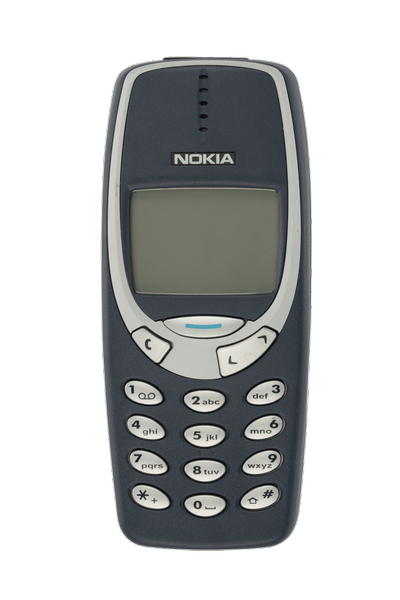
You carry a Nokia 3310 (O). On Ogygia it is Calypso's channel — she texts you warnings, tips and pleas, and while her hold on you is warm she will freeze a machine bearing down on you. Off her island the handset finds whichever AI rules the ground you are standing on, and you can text it: POLYPHEMUS answers in blunt capitals, CIRCE sweetly and in the language of tariffs, HELIOS like the sun itself. Signal comes off the island's own network, so it is strongest near a fortress core and gone entirely where there is nothing left to carry it. Making landfall anywhere new brings a roaming welcome from a carrier that no longer has customers, only subjects. There is also Snake on it, and it remembers your best game.
The road of the dead
The Backspace is an alternative way across. Its ways up are labelled doors, one per island, each drawn with its name on an isometric exit sign — walk up to the door of the island you want and you come up there. No chart, no boat: the doors are the choice.
Coming home
Felling an island's daemon powers down every machine and every obelisk on that island. Do that on all four of the martial islands — and leave Calypso rather than kill her — then sail for Ithaca. Land there with the war won and Argos lifts his grey head and knows you, and that is the end of the road and the beginning of the rest of it. Land there with daemons still standing and it is only landfall: the machines still hold the sea. Fell the rest of them, then come back for good.
Game mode
Volume
100%
Sound
100%
Music
70%
Save to disc